
Choosing the Best Time to Visit Ottawa for a Short Trip
For a short sightseeing trip to Ottawa, late spring and early autumn often provide the most balanced combination of walking comfort and usable daylight. Choose summer when the longest sightseeing days matter most or winter for a cold-weather seasonal experience, then check the forecast and event timing for the exact travel dates.
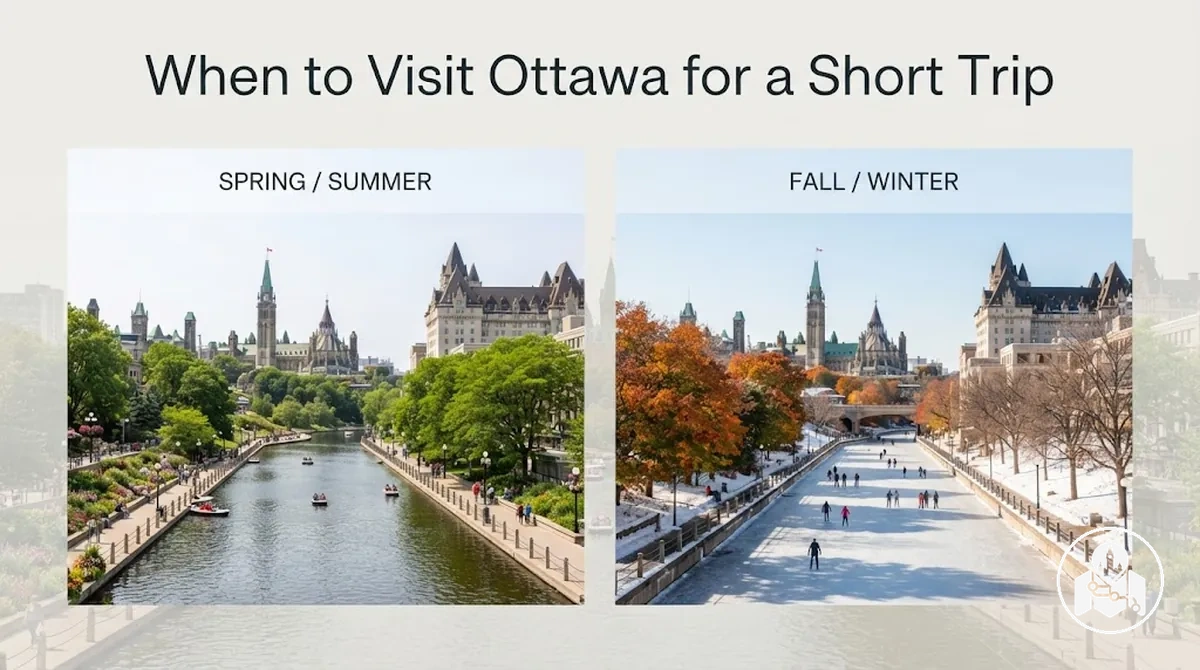
Short-trip decision aid
Match the season to your main priority
Choose the factor that matters most. The result shows the season pattern that best matches that priority and the main trade-off to plan around.
Season pattern
Late spring or early autumn
These periods can combine milder outdoor conditions with useful daylight without the coldest winter conditions or peak summer heat.
Main trade-off: Both are transitional periods, so conditions can shift quickly and the forecast for the actual dates matters.
Decision boundary: no season is best for every short trip. Exact weather, event timing and visitor demand can change the practical choice for specific dates.
Ottawa’s 1991–2020 climate normals illustrate the seasonal contrast: the average daily temperature is about -9.6°C in January and 21.3°C in July. Climate normals describe long-term patterns; a trip-date forecast is the better guide to the weather a particular short visit is likely to encounter.
Table of Contents
What Matters When Comparing Ottawa Seasons for a Short Visit
The most useful criteria for comparing Ottawa seasons are weather comfort, daylight, precipitation variability, crowds and seasonal events because these conditions change outdoor comfort, usable sightseeing time and flexibility on a short trip.
The criteria should be judged consistently across seasons, but their importance depends on the traveller's priorities rather than an equal weighting.

Physical conditions determine how much sightseeing time can be used comfortably and predictably.
Temperature affects outdoor comfort, daylight changes the hours available for sightseeing, and rain or snow can increase the need for schedule flexibility when a short visit has little time to absorb disruption.
| Criterion | Seasonal condition | Short-trip implication |
|---|---|---|
| Weather comfort | Temperature and exposure conditions change across Ottawa seasons. | Conditions can make extended outdoor sightseeing more or less comfortable. |
| Daylight | Usable daylight is longer in summer and shorter in winter. | Longer daylight can extend outdoor sightseeing hours and make a short schedule more flexible. |
| Precipitation variability | Rain, snow and changing weather can affect particular travel dates. | Disruption can reduce usable outdoor time and increase the value of contingency options. |
| Crowds | Visitor demand can change with season, holidays and specific dates. | Busier conditions can reduce spontaneity and make timing more important during a short stay. |
| Seasonal events | Events occur on specific dates and change the seasonal character of a visit. | An event can add a distinctive experience while also increasing the importance of exact trip timing. |
Crowds and seasonal events affect a different part of the decision: visitor demand can change access, pace and spontaneity, while event timing can add seasonal interest.
The same condition can therefore be favourable for one priority and restrictive for another.
The weight of each criterion also changes with the time available, so travellers should decide how long to stay in Ottawa when judging how much weather disruption, limited daylight or schedule pressure a visit can absorb.
Comparing Ottawa seasons is therefore a trade-off between comfort, usable time, flexibility and seasonal experience rather than a single score.
Temperature and Outdoor Sightseeing Comfort
Ottawa's seasonal temperature affects outdoor sightseeing comfort by changing how demanding extended walking and time outside can feel.
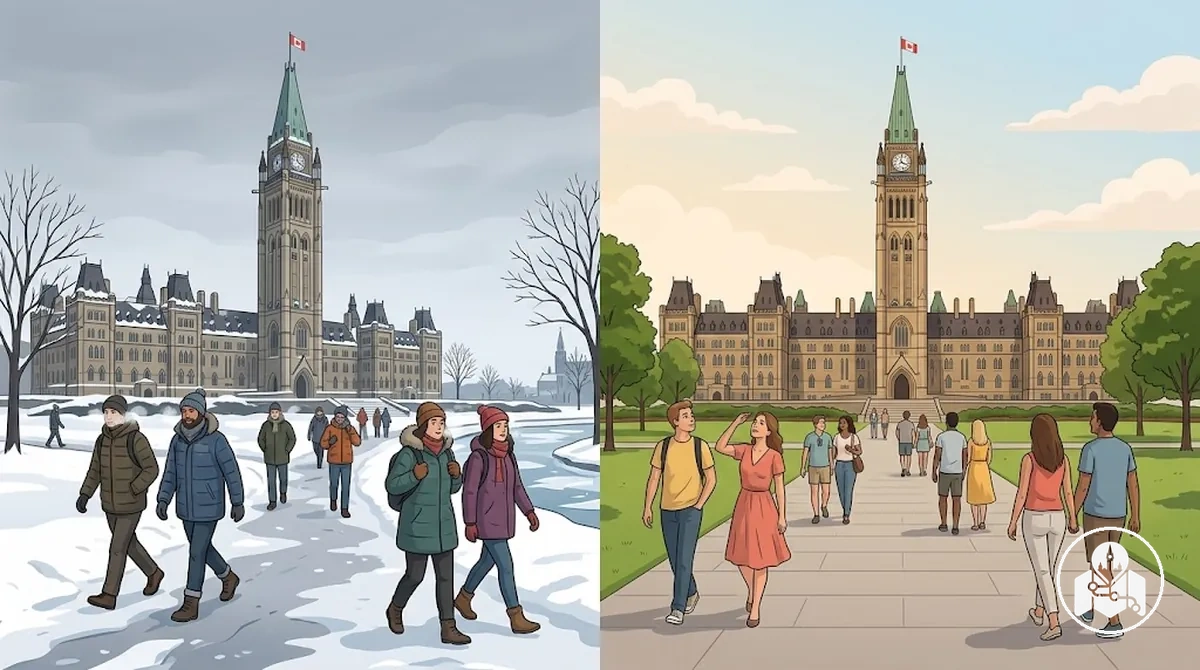
Climate-normal contrast
- January
- -5.2°C normal daily maximum; -14.0°C normal daily minimum.
- July
- 26.7°C normal daily maximum; 15.8°C normal daily minimum.
These Environment and Climate Change Canada values are 1991–2020 climate normals for Ottawa (City), not a forecast for a specific visit.
Cold winter conditions can make prolonged outdoor sightseeing more demanding, particularly when wind chill, snow or ice adds to exposure, while summer heat can reduce comfort during longer periods outside for some visitors.
Spring and autumn are transitional, so actual temperature conditions can shift between warmer daytime periods and cooler overnight conditions.
These contrasts can change how much outdoor time feels practical during a short stay without establishing a universal comfort threshold.
Daylight Available for Sightseeing
Ottawa has its longest daylight in summer and its shortest daylight in winter, which changes the number of sightseeing hours available for a short visit.
Timeanddate's solar data for Ottawa, Ontario, shows that 21 June 2026 has sunrise at 5:14 am, sunset at 8:54 pm and 15 hours 40 minutes of daylight, while 21 December 2026 has sunrise at 7:39 am, sunset at 4:22 pm and 8 hours 43 minutes of daylight; these are date-specific values, not whole-season constants.
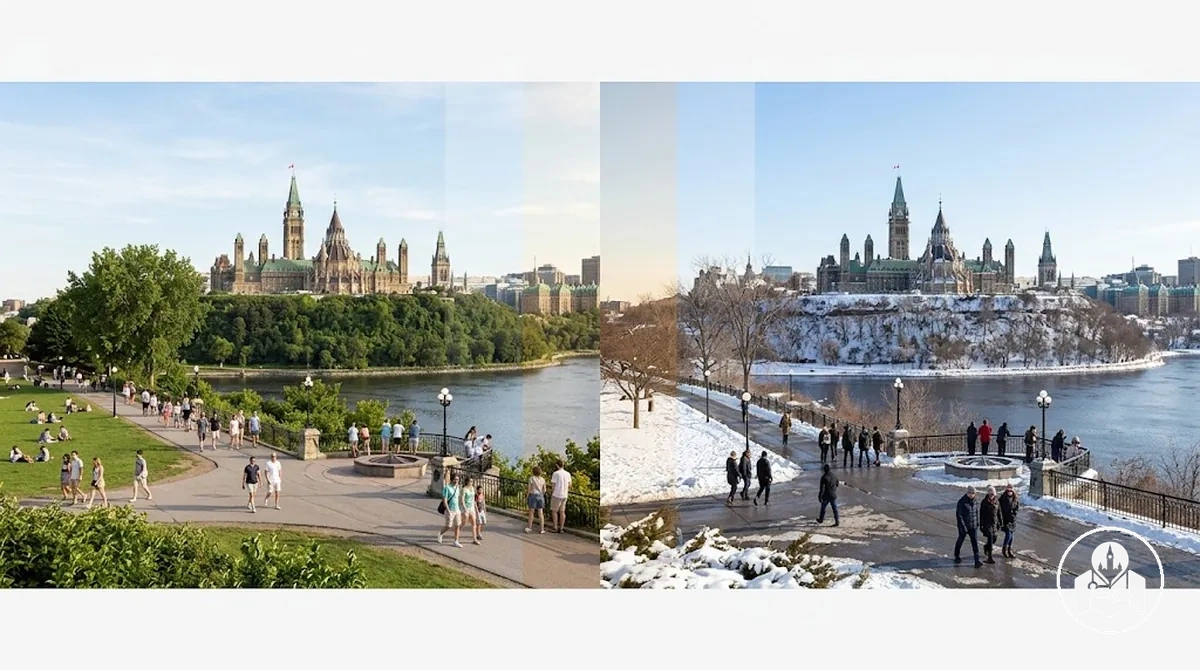
Spring daylight lengthens toward summer, while autumn daylight shortens toward winter, so sunrise and sunset times shift throughout both transitional seasons.
Daylight duration does not indicate sunshine or weather quality; it defines the daylight window within which outdoor sightseeing can be scheduled.
For a short Ottawa visit, longer daylight provides more scheduling flexibility, while shorter winter daylight concentrates outdoor sightseeing into a narrower part of the day.
The representative dates below organise the daylight contrast for scheduling rather than indicating weather quality.
| Representative date | Sunrise | Sunset | Total daylight |
|---|---|---|---|
| 21 June 2026 | 5:14 am | 8:54 pm | 15 h 40 min |
| 21 December 2026 | 7:39 am | 4:22 pm | 8 h 43 min |
Rain and Weather Variability During a Short Stay
Precipitation and short-term weather variability matter more when an Ottawa visit has only a few sightseeing days because one disrupted day can consume a larger share of the available schedule.
Rain can reduce usable outdoor time or shift planned activities indoors, so a short stay benefits from enough flexibility to absorb a change in conditions without treating precipitation as making the trip unsuitable.
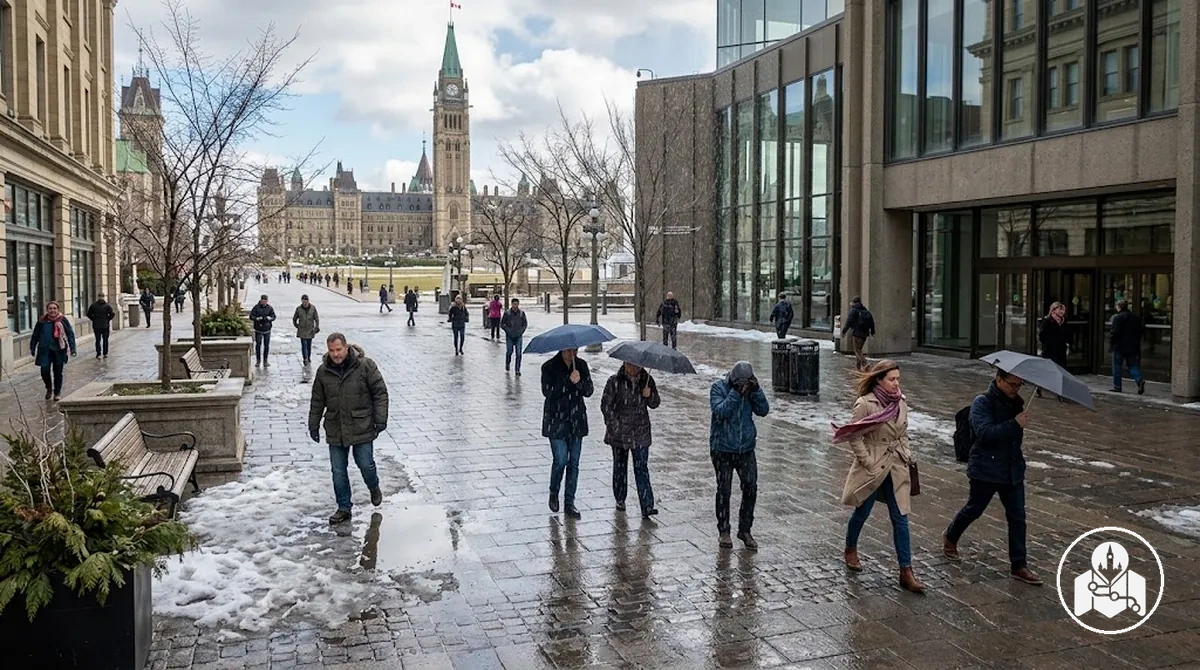
What changes the usable sightseeing window
- Rain
- Can compress outdoor sightseeing time or shift planned activities indoors.
- Snow or freeze-thaw conditions
- May slow movement when walking surfaces become snowy or icy.
- Wind or rapid temperature shifts
- Can increase exposure and add variability within the same short stay.
- Climate pattern vs forecast
- Climate normals describe long-term patterns; forecasts describe expected weather for specific dates.
Because one disrupted day can consume a large share of a short visit, keep flexible indoor alternatives available and, when wet conditions affect the schedule, use a rainy-day Ottawa itinerary rather than treating the whole stay as lost.
Crowds and Seasonal Events
Ottawa crowds and seasonal events are separate but related criteria for a short stay: visitor demand affects access, pace and flexibility, while an event can add a distinctive seasonal experience tied to a particular time and place.
Because visitor demand can vary by date, location and event, a busy period does not by itself indicate whether that travel period is suitable for a particular visitor.

Visitor demand
Higher demand can increase congestion around busy public spaces or attractions and reduce spontaneity when a short schedule leaves little time to adjust.
Seasonal events
Events can add time-specific interest, but their timing may also concentrate visitor activity and make access or advance planning more important.
The practical trade-off is seasonal experience versus schedule flexibility. A busy period is not automatically unsuitable, and a quieter period is not automatically preferable; the useful choice depends on the traveller's priorities and exact dates.
How Ottawa's Seasons Compare for a Short Trip
Winter, spring, summer and autumn offer different balances of weather comfort, daylight, precipitation or snow risk, crowds, seasonal character and flexibility for a short Ottawa trip.
No season is universally preferable because the practical trade-off changes with the conditions and experiences a traveller prioritises.
Using the same criteria across all four seasons makes the differences easier to compare without turning them into a ranking.
The table summarises typical season-level conditions and their implications for a short sightseeing schedule; conditions near the beginning or end of spring and autumn can differ substantially from the seasonal midpoint.
| Season | Weather comfort | Daylight | Precipitation or snow risk | Crowds | Seasonal character | Schedule flexibility |
|---|---|---|---|---|---|---|
| Winter | Cold conditions make extended outdoor sightseeing more demanding. | Shorter daylight than in the warmer seasons. | Snow, ice and freeze-thaw conditions can affect movement and outdoor plans. | Visitor demand varies by date, location and seasonal event. | A distinct cold-weather and snow-season experience. | Outdoor plans can require more weather-dependent adjustment. |
| Spring | Warming conditions can vary considerably during the transition from winter. | Daylight lengthens toward summer. | Rain and changing conditions can affect outdoor plans. | Visitor demand varies with dates, locations and events. | A transitional season associated with spring growth and renewed outdoor activity. | Increasing daylight supports sightseeing, while variable weather can increase contingency needs. |
| Summer | Warm conditions support outdoor sightseeing, although heat can reduce comfort on some days. | Longer daylight than in the other seasons. | Rain can still disrupt particular sightseeing periods. | Visitor activity can be stronger around popular dates and events. | Long daylight and an active outdoor-event period. | Long daylight expands scheduling options, although busy periods can reduce spontaneity. |
| Autumn | Cooling conditions can vary as the season moves toward winter. | Daylight shortens toward winter. | Rain and changing temperatures can affect outdoor plans, with later conditions moving closer to winter. | Visitor demand varies with dates, locations and events. | Seasonal foliage and a transition toward colder conditions. | Outdoor sightseeing remains adaptable, but shortening daylight and variable weather can narrow the usable schedule. |
The strongest contrast is between winter's colder conditions and shorter daylight and summer's warmer conditions and longer daylight, while spring and autumn function as transitions between those seasonal states.
Crowds and precipitation are less suitable for a fixed season-wide label because both can vary by date, location, event and specific weather conditions.
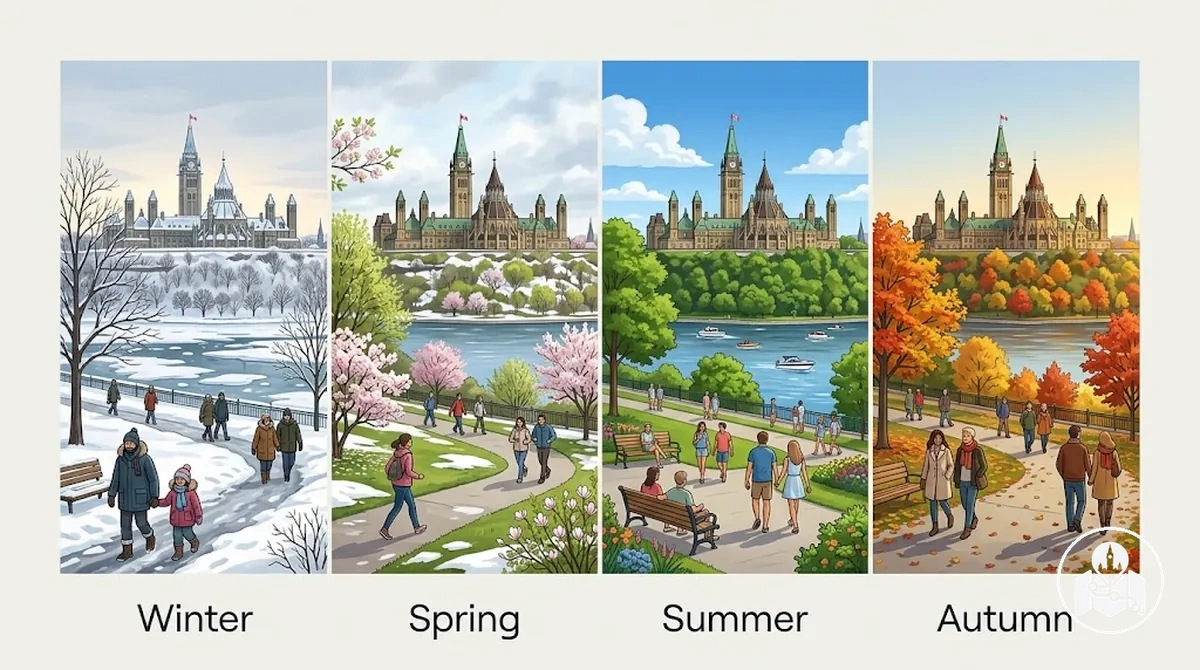
Transitional months can resemble the preceding or following season rather than a seasonal midpoint, so the forecast for actual travel dates remains important.
Suitability for a short trip depends on whether the priority is weather comfort, longer daylight, a particular seasonal character, fewer schedule constraints or greater flexibility rather than on a single season being preferable for every visitor.
Visiting Ottawa in Winter
An Ottawa winter changes a short visit through cold conditions, shorter daylight and the possibility of snow or ice, which can make outdoor sightseeing more demanding than in milder conditions.
Snow cover and icy surfaces are not constant on every date, but when present they can slow walking and reduce the amount of comfortable walking time available within a compact sightseeing schedule.
Shorter winter daylight concentrates outdoor sightseeing into a narrower part of the day, while cold, snow or ice may require greater weather resilience and more flexibility around outdoor plans.
At the same time, winter activities can give the visit a distinct seasonal experience, although weather-dependent activities should not be assumed to be available on specific travel dates.
Winter may suit travellers who value the winter atmosphere and seasonal activities and can accept tighter daylight and weather constraints.
Once those trade-offs fit the priorities of the short stay, travellers can plan a winter Ottawa itinerary around the conditions expected for their actual travel dates.
Visiting Ottawa in Spring
An Ottawa spring is a transition rather than one stable set of conditions: temperatures warm and daylight lengthens as the season progresses, while rain, snowmelt and possible slush can affect outdoor sightseeing at different points.
Bloom timing also varies with seasonal conditions, so flowering landscapes should not be assumed for every spring travel date.
Early spring may retain colder conditions and lingering snow, snowmelt or slush, making walking conditions and outdoor comfort less predictable.
By late spring, conditions tend to be milder and daylight longer, while blooms may add seasonal scenery; rain can still affect outdoor plans, and exact flowering periods remain timing-dependent rather than fixed.
For a short visit, this within-season change means exact dates matter: late spring can offer longer daylight and milder conditions for outdoor sightseeing, whereas early spring may require greater flexibility around cold, wet or slushy conditions.
Visitor demand can also vary with specific dates and seasonal activities, so spring suitability depends on whether the expected conditions and bloom timing align with the traveller's priorities.
Visiting Ottawa in Summer
An Ottawa summer provides long daylight and warm temperatures, giving a short trip a broad window for outdoor sightseeing and allowing more activities to fit around a daytime schedule.
The longer daylight can increase scheduling flexibility, but warm conditions do not mean every summer day will be clear or equally comfortable.
Humidity can make prolonged outdoor time feel more demanding for some travellers.
Summer weather may also bring showers or thunderstorms that temporarily reduce outdoor time, so a compact itinerary benefits from some contingency flexibility.
Crowds and event-related visitor demand can constrain spontaneity on particular dates or in busy locations, although those conditions should not be assumed across the whole season.
Summer therefore fits a short visit most clearly when long daylight and outdoor sightseeing time are priorities and the traveller can accommodate possible heat, humidity, changing weather and periods of stronger demand.
Visiting Ottawa in Autumn
An Ottawa autumn is a timing-sensitive transition: early autumn tends to retain milder conditions, while the temperature decline and daylight reduction through the season move late autumn toward colder weather and shorter sightseeing days.
This change can reduce the comfortable outdoor sightseeing window as autumn progresses, so September and November should not be treated as equivalent conditions for a short trip.
Fall colour adds a distinctive seasonal factor, but foliage timing can vary with seasonal conditions and should not be tied to a guaranteed peak date.
Early autumn can combine longer daylight and milder conditions with developing seasonal scenery, whereas late autumn brings shorter days, colder conditions and less certainty that foliage will remain at its most colourful.
Precipitation variability can also affect outdoor plans at either point in the season, making schedule flexibility useful when sightseeing time is limited.
For a short Ottawa visit, the practical trade-off is therefore timing within autumn rather than the season alone: earlier dates may provide more daylight and milder outdoor conditions, while later dates involve colder conditions and shorter days.
Visitor demand can vary by specific date and seasonal activity rather than following one reliable pattern throughout autumn, so exact travel dates matter when assessing weather, fall colour and sightseeing flexibility.
How Ottawa Weather Changes by Month for a Short Visit
Monthly Ottawa weather averages refine the broader seasonal pattern by showing where average temperature and precipitation conditions change within a season.
They describe historical climate patterns rather than the exact future weather for specific travel dates, so a current forecast remains the more relevant guide close to a short visit.
Timeanddate's climate data for Ottawa, based on weather reports from Ottawa International Airport collected during 1992–2021, provides the average temperature highs and lows and total precipitation in the table; the figures are rounded metric conversions.
The daylight column shows the seasonal direction of available daylight, while the final column connects these climate attributes to sightseeing comfort and schedule resilience rather than predicting conditions on a particular day.
| Month | Average temperature high / low | Total precipitation | Daylight trend | Short-trip implication |
|---|---|---|---|---|
| January | -5°C / -14°C | 67 mm | Short, increasing | Cold conditions can constrain prolonged outdoor sightseeing and increase the value of schedule flexibility. |
| February | -3°C / -13°C | 54 mm | Increasing | Winter cold remains a significant outdoor-sightseeing constraint even as daylight increases. |
| March | 2°C / -7°C | 64 mm | Increasing | The seasonal transition brings daytime temperatures above freezing on average while nights remain below freezing, so snow, melt and changing surface conditions can still affect plans. |
| April | 11°C / 1°C | 79 mm | Increasing | Warmer average temperatures and longer daylight expand outdoor options, although transitional weather can still require flexibility. |
| May | 19°C / 7°C | 75 mm | Increasing | Milder temperatures and longer daylight generally provide a broader outdoor sightseeing window. |
| June | 24°C / 13°C | 99 mm | Near annual maximum | Warm conditions and long daylight support extended sightseeing, while precipitation can still disrupt particular periods. |
| July | 27°C / 16°C | 96 mm | Long, beginning to decrease | The warmest average temperatures can increase heat exposure during long outdoor periods despite extensive daylight. |
| August | 26°C / 14°C | 82 mm | Decreasing | Warm conditions continue, but daylight begins contracting more noticeably toward autumn. |
| September | 21°C / 10°C | 87 mm | Decreasing | Cooling temperatures can remain suitable for outdoor sightseeing, while shorter daylight starts to narrow scheduling flexibility. |
| October | 13°C / 4°C | 87 mm | Decreasing | The seasonal transition toward colder conditions and shorter days makes exact travel dates increasingly important. |
| November | 6°C / -3°C | 70 mm | Short, decreasing | Average nighttime temperatures fall below freezing, while shorter daylight concentrates outdoor sightseeing into a narrower window. |
| December | -1°C / -9°C | 73 mm | Near annual minimum | Cold conditions and short daylight increase weather sensitivity and reduce the flexible outdoor sightseeing window. |
The strongest month-to-month shifts occur around seasonal transitions: March and April move from winter-like average temperatures toward milder spring conditions, while October and November move toward freezing overnight averages and shorter days.
June and July combine the longest part of the daylight cycle with the warmest average temperatures, whereas winter months combine colder averages with limited daylight.
Total precipitation does not by itself distinguish rain from snow, so snow conditions for actual travel dates should be checked against the forecast.
Matching the Season to Your Short-Trip Priorities
The suitable Ottawa season for a short trip depends on which priorities matter most rather than on one season being universally preferable.
Mild walking weather, daylight, winter atmosphere, seasonal colour, crowd exposure and tolerance for weather variability can each support a different reasonable choice.
The comparison below maps each priority to the conditions that support it, the Ottawa season pattern most closely aligned with those conditions, and the trade-off involved.
Crowd exposure remains date- and event-dependent, so it cannot reliably be assigned to one season as a guaranteed quieter period.
| Priority | Supporting condition | Suitable season pattern | Trade-off |
|---|---|---|---|
| Mild walking weather | Moderate temperatures that reduce exposure to winter cold or peak summer heat. | Spring and early autumn can align with this priority when conditions are milder. | Both are transitional periods, so weather variability makes exact travel dates important. |
| Longest sightseeing days | Long daylight provides a broader window for outdoor sightseeing. | Summer aligns most closely with this priority because daylight is longest around this part of the year. | Warm or humid conditions can reduce sightseeing comfort on some days, and busy dates can reduce spontaneity. |
| Winter atmosphere | Cold conditions and the possibility of snow support a distinct winter seasonal experience. | Winter aligns with this priority for travellers comfortable with cold-weather conditions. | Shorter daylight, cold, snow or ice can make outdoor plans more weather-dependent. |
| Seasonal colour | Autumn foliage can add time-sensitive seasonal scenery. | Autumn aligns with this priority when foliage timing overlaps the travel dates. | Fall colour timing varies, while temperatures cool and daylight shortens as autumn progresses. |
| Lower crowd exposure | Visitor demand depends on the specific date, location and seasonal event pattern. | Crowd levels depend on the specific date, location, holiday and event pattern rather than on one season alone. | Choosing for lower crowd exposure requires checking the actual travel dates rather than relying on a season-wide assumption. |
| Greater tolerance for weather variability | Flexible plans make changing rain, temperature, snow or transitional conditions easier to absorb. | Spring and autumn can remain suitable when the schedule can adapt to changing conditions. | More variable conditions can reduce predictability for outdoor sightseeing on a short schedule. |
The main trade-off is between the condition being prioritised and the constraints that accompany it: longer summer daylight can come with heat or busier dates, winter atmosphere with colder conditions and shorter days, and seasonal colour with timing uncertainty.
Spring and autumn can favour mild walking weather at particular points, but their transitional conditions increase the importance of checking the forecast for the actual travel dates.
For example, travellers prioritising long outdoor sightseeing windows may favour summer, while those prioritising fall colour may accept shorter daylight and greater timing sensitivity in autumn.
A couple whose shared priority is seasonal atmosphere can use the same criteria to plan an Ottawa trip for couples without treating one season as suitable for every pair.
Once the timing reflects the trip's priorities and accepted trade-off, the next step is to plan an Ottawa travel itinerary around the conditions expected for those dates.